Introduction
Building work in London these days could well be described it as ‘eye-wateringly’ expensive and ‘ouch!’ is a very commonly heard word when people find this fact out for themselves on reviewing builder’s quotations. Indeed, one of the most crucial challenges when thinking about what you could do to transform your property these days is the cost of building work, which is at an historic high.
It has been that way since a big jump in material costs during the Covid pandemic due to problems with supply chains and then also the scarcity of labour in the construction industry (caused to a large extent by an exodus of European workers after Brexit) which has pushed wages up. Those two things plus the high rate of inflation over the last few years has made an enormous difference to what you get for your money in terms of building work.
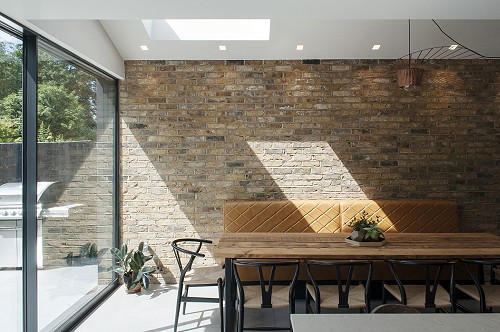
For an example of this around 7 years ago we did a full high-end refurbishment and extension of a 4 bed house in Dulwich (picured above) with new kitchen, bathrooms and fully furnished for a project cost of £360k, including VAT. Nowadays, we reckon that this exact same project would be coming out at around £450k.
Anyway, this is the quite stark reality and one that has had consequences for home owners who feel they can’t afford to do the work they have been dreaming of and also for us architects who have seen a real slow down in work, particularly in the private residential sector. Having said that we really don’t think that should dampen anyone’s enthusiasm for getting some work done, it just means that more careful thought needs to be put into the design and into defining the scope of the work.
At Up Architects we have many years of experience in creating bespoke homes and retail and hospitality spaces in and around London, and so we have compiled this handy guide to how you should be thinking of budgeting for your project. This article is tailored for private property owners seeking a distinctive touch for their homes or businesses —something bespoke and unique, rather than the cheapest way to build something. Consequently, the cost advice provided is based on fairly comprehensive transformations, with an emphasis on good design with high quality materials and fixtures and fittings. The costs advice for the main building works will be relevant to any level of design however as these things just tend to costs what they cost.
What Makes Up the Overall Budget?
Creating a realistic budget involves considering all the various elements so here is a breakdown of the four main elements that typically comprise the total budget, or ‘project costs’:
1. Construction Costs
The construction cost refers to the payment made to the builder for completing the works. To illustrate what is encompassed by construction cost imagine turning a house upside down and shaking it; anything that firmly remains in place is regarded as part of the cost. This incorporates fixtures, fittings, and finishes—examples being kitchen units, floor finishes, and light fittings. To understand a little bit more about how construction costs are broken down (by cost consultants and by builders alike), there is a section at the end of this article.
2. Professional Fees + Permissions
The fees cover the costs of the usually necessary professionals such as the architect, structural engineer, party wall surveyor, and one off reports and fees such as for a measured survey, building control approved inspector, heritage and trees consultants etc. Items such as opening up works and trial pits should also be factored in here. The costs for permissions, including planning applications and agreements with the water authority, are usually relatively small compared to other project expenses when undertaking a comprehensive renovation.
3. Contingencies
Contingencies in a building project refer to budgetary allocations set aside for unforeseen events or changes. This includes design contingencies for potential alterations to the initial plans, construction contingencies for unexpected on-site challenges, and inflation contingencies to account for price fluctuations in materials and labour during the project timeline. These buffers ensure financial flexibility and help mitigate risks throughout the building process.
4. VAT
VAT, or Value Added Tax, in a building renovation project, is a consumption tax applied to the purchase of goods and services. It is typically included in the cost of materials, labour, and other project-related expenses, contributing to the overall project expenditure, with the caveat that certain exemptions or reductions may apply.
How do I Estimate Construction Costs for my Project?
Utilising a per square metre cost rate is an appropriate initial step when estimating the budget for a construction project, especially in the early stages of design ideas, before detailed designs take shape. This method provides a broad but essential understanding of the potential costs based on the size of the project area. The per square meter rate serves as a preliminary benchmark, offering a quick and convenient way to gauge the financial scope of the project. It aids in setting realistic expectations and aligning the initial project vision with budgetary constraints.
For homes located in central London involving a total house transformation, including extension and refurbishment, a good approximate per square meter cost to allow for is between £2,800 - 3,800m2. This amount is based on taking a holistic ‘whole house’ view that allows for more expensive areas of construction (kitchens and structural extensions for example) alongside lower cost areas of refurbishment (existing bedrooms for example). While this method may not account for the intricacies of design nuances, material choices, or specific site complexities, it offers a foundational framework for homeowners to commence the budgeting process and engage in more informed discussions with us on next steps.
When Up Architects are working on bespoke homes in central London, after initial designs are completed, a key part of our design process is to have the proposals costed in a more comprehensive way by a cost consultant. We see a real benefit in having a ‘neutral’ party to the architect client relationship provide a detailed analysis of costs. As the project progresses, this initial estimation, based on experience and assumptions due to the preliminary nature of the designs, can be refined and tailored to align more closely with the evolving design details and decisions made on designs, materials and products.
What Are Construction Costs Composed Of?
Over the years we have seen a lot of construction cost documents produced by builders quoting for projects or produced by cost consultants as cost reports or estimates. They all can differ slightly in the way they are compiled but broadly follow a similar structure. To our clients, they can often appear slightly overwhelming. They are composed of a mixture of very tangible items, such as taps, light fittings or floor finishes and other less tangible items such as preliminaries (every client asks us what these are!) so below is a breakdown of the typical sections seen in a construction cost and an explanation of each one;
Shell works The shell works of a domestic project refer to the primary structural and exterior components of the building, including foundations, walls, roof, windows and doors. These elements provide the basic framework and envelope of the building and are typically installed before the interior finishes are applied. This section is probably the most difficult for a lay person to be able to estimate component by component as this section is most influenced by raw material costs and labour costs that cost consultants and contractors have access to and experience of calculating.
Fit Out works The fit out works of a domestic construction project refer to the interior finishes and installations that are added to the building shell after its completion. This includes all of the non-structural elements, such as flooring, wall finishes, paint, cabinetry, lighting, plumbing and electrical work. On all the above items, your cost consultant or builder will calculate how many square metres or what quantity are required and what install labour costs to allow for.
Preliminaries Preliminaries (also known as enabling works) are critical to the success of any construction project as they lay the foundation for the main construction work to take place. They ensure that the site is safe, accessible, and ready for the main construction work to begin. They include site clearance, demolition, removal (including skips), installation of temporary services (including toilets) and fencing and security around the site. As a rule of thumb, preliminaries will usually account for between 10-15% of the total construction cost.
How do I Work Out Total Project Cost?
Once the estimated construction cost is determined, using the per square metre rates, you can then proceed to estimate the total project cost by applying percentage overlays to cover various aspects. Typically, we recommend allowing
Professional Fees and Permissions
Approximately 15 -20% (of estimated construction cost)
Contingencies
Approximately 10% (of estimated construction cost) (note, we recommend slightly higher if your property is a Listed building).
VAT
Typically 20% (on total amount) (note, you may be eligible for reduced rates of 5% if it qualifies for the HMRC’s reduced rate scheme. The reduced rate aims to encourage the revitalisation of vacant properties and promote sustainable development).
These overlays ensure a more comprehensive budget, accounting for essential professionals, permissions, unforeseen events, or changes (contingencies), and VAT on goods and services. This detailed budgeting approach provides financial flexibility, allowing for informed discussions and adjustments as your project progresses and evolves. We have shown a worked example below based on a recent project we have completeed in Sydenham.
A 3 bedroom semi detached property of 130m2 was completely refurbished and extended to increase the total house area by approximately 30m2
Refurnishment element = 130m2 x £1,800/m2 = £230k
New build extension element = 30m2 x £3,500/m2 = £105k
Total construction cost = £335k
Contingency at 10% = £30k
Fees and Permissions at 15% = £50k
VAT on Total at 20% = £80k
Total Project Cost= £495k
What if I’m not Planning on Doing Any Structural Work?
The average cost per square meter method, as discussed in the preceding paragraphs, serves as an excellent introductory approach to estimating the cost of planned work on your property. However, it is an average that presupposes entire house transformations, encompassing a combination of extensive structural alterations (such as concrete foundations and steel beams) and interior fit-out and decoration (such as timber stud walls and painting). This assumption may not be universally applicable to all projects, as some may involve minimal structural work or none at all.
A more nuanced method for assessing costs for your home involves distinguishing between these two types of work and applying them to your specific project. Presently, we are observing costs ranging from £2,800 to £3,800 per square meter for comprehensive works that entail structural modifications and £1,500 to £2,100 for fit-out works within existing spaces that do not require structural alterations.
How do I Manage Costs During a Project?
At Up Architects, we prioritise transparency in managing costs for home transformations, ensuring that our clients are equipped with the necessary information right from the project’s inception. Our commitment to informed decision-making begins with the very first meeting. During this initial consultation, we engage in discussions about design preferences, test preliminary sketches, and present an overview of potential associated costs. This process, akin to the methods outlined in this guide, is tailored to the unique specifications of your project.
These early conversations serve as the foundation for shaping the design direction as we transition into the subsequent concept design stage. As we progress through this phase, we recommend our clients to appoint a cost consultant to produce an initial cost report based on the favoured design. This report becomes a valuable tool, not only for instilling confidence in what to submit for planning application submissions but also as a guiding framework throughout the technical stages of design development. The cost report serves as a dynamic reference point, enabling key decisions in the design process to be aligned with an overall cost target. By integrating cost considerations into every stage of the project, we empower our clients to have a clear understanding of the financial landscape, fostering collaboration and ensuring that the envisioned transformation aligns seamlessly with budgetary expectations.
Note, our advice and cost estimations are based on our extensive experience as architects specialising in bespoke homes in London. However, it’s important to note that each property and project is unique. Variables such as specific site complexities, material choices, and design nuances can significantly impact costs. Therefore, while our comprehensive guide serves as a valuable starting point, we recommend consulting with our experienced team at Up Architects to tailor the budgeting process to your specific project requirements and ensure accurate estimations. Are you planning to transform your home? Contact us by clicking the link below for tailored advice relating to your specific project and for guidance on next steps. https://uparchitects.co.uk/contact/ Some other links you might find useful For advice on VAT for construction to your home https://www.gov.uk/vat-builders For advice on working with architects, visit the Royal institute of British Architects https://www.architecture.com/working-with-an-architect
